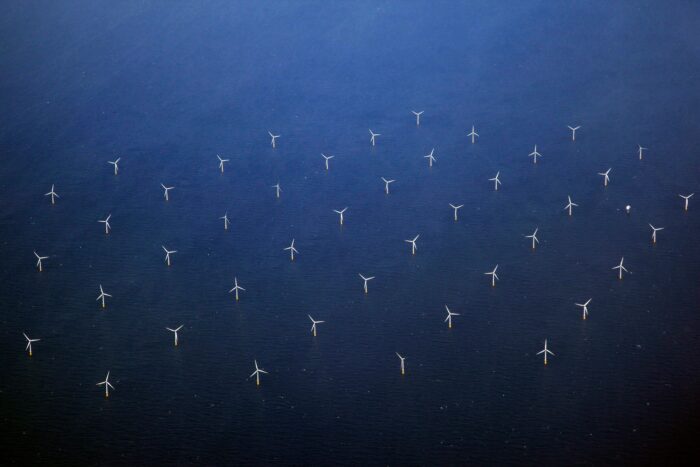

The new Land Use Act sets a statutory minimum setback of 1,250 metres between wind turbines and residential areas and provides that the construction of solar power plants with a total area of 50 hectares or more require either a solar power master plan or a local detailed plan.
Last week (16 April), the Government submitted a proposal (HE 70/2026 vp) for a new Land Use Act (alueidenkäyttölaki). The proposed act would replace the current Land Use Act (132/1999) and amend numerous other related laws. The overall three-tier planning hierarchy (regional plan – local master plan – local detailed plan) would, however, be retained, as would the central role of municipalities in land use planning. The proposed act would also have implications for wind and solar power projects, particularly from the perspective of planning and the siting of power plants.
Main implications for wind project developers
The key reform proposal affecting the wind power sector concerns a new statutory minimum setback of 1,250 metres between wind turbines and residential areas. The minimum distance would regulate the distance of wind turbines from (a) existing residential buildings, (b) residential buildings for which a building permit has been granted and (c) residential building sites designated in a valid master plan or local detailed plan. The minimum distance would only apply to wind power areas that are not located within a wind farm area designated in the regional plan. In practice, this means that wind turbines could be sited closer to residential areas through regional planning. Furthermore, the minimum distance may be deviated from if at least four-fifths of the landowners and land lease right-holders in the area provide their written consent. The minimum distance would also not apply where a master plan or local detailed plan governing wind power construction is already in force in the area. Originally, the minimum distance was intended to be based on the height of the wind turbines, but due to significant criticism received during the public consultation, a fixed minimum distance of 1,250 metres was adopted.
The aim of regulating the minimum distance is to direct wind power projects primarily to the wind power areas designated in regional plans, which is proposed to facilitate coordination with other land use and reduce adverse impacts. From an economic perspective, the minimum distance requirement is expected to modestly reduce the number of viable wind power sites located outside regionally designated wind areas, whilst slightly increasing the need for power line connections and access roads — both of which may have an adverse financial impact on project developers. Under the proposal, the specific content requirements applicable to wind power master plans would henceforth extend to local detailed plans in which wind power construction is designated.
Main implications for solar project developers
With a view to streamlining solar power construction, the proposal introduces a dedicated chapter of specific provisions for solar power development into the new Land Use Act, including a solar power master plan (aurinkovoimayleiskaava) that could serve directly as the basis for a construction permit, thereby removing the requirement for a separate local detailed plan. As with wind power, the specific content requirements for the solar power master plan would henceforth extend to local detailed plans in which solar power construction is designated.
Under the proposed planning requirements, the construction of solar power plants on undrained, natural peatlands (ojittamaton luonnontilainen suoalue) would be prohibited. In addition, a significant proportion of a solar power plant’s total area would not be permitted to be situated on forested land (metsämaa). The expression “significant proportion” attracted criticism during the public consultation due to its ambiguity, notwithstanding broad support for such regulation in principle. In practice, this would mean that only a small proportion of a solar power plant’s total area could be designated on forested land. Furthermore, the proposal provides that the construction of solar power plants with a total area of 50 hectares or more is to be treated as “significant construction” meaning that the construction of such plants would always require either a solar power master plan or a local detailed plan. The area-based threshold for solar-related “significant construction” was originally proposed at 10 hectares, but following the public consultation, the final proposal settled on 50 hectares — which nevertheless remained below the thresholds proposed by industry stakeholders.
It should also be noted that the Ministry of the Environment had intended in spring 2025 to compile in the form of guidelines the practices applicable to the planning and construction of large solar power plants. This work was, however, left incomplete as the Ministry focused on advancing the new Land Use Act and preparing statutory regulation rather than guidance materials. Authority guidance supplementing the new legislation may be expected once the legislative amendments relating to the Land Use Act reform enter into force.
Entry into force
Despite widespread calls from project developers for full transitional protection for pending plans, no such protection was granted. Under the proposal, any plan that has not been made publicly available for inspection as a draft prior to the Act entering into force would be drawn up and approved in accordance with the new Land Use Act. The new Land Use Act and related legislative amendments are intended to come into force on 1 January 2027.
In Finnish: Hallituksen ehdotus uudeksi alueidenkäyttölaiksi